

USCIS Just Rewrote the Public Charge Test. Let’s Look at What That Means…
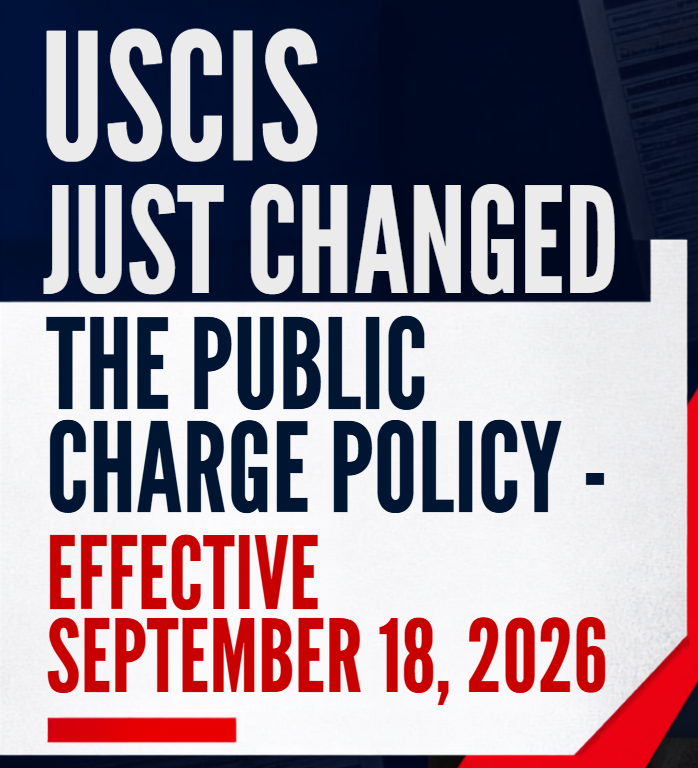
If you have an adjustment of status case coming together, I want to make sure this date is on your radar: September 18, 2026. What side of it your I-485 lands on could make a difference in how your case, or how your likelihood to become a “public charge” gets evaluated.
It’s important to remember that this isn’t a new issue… Public charge policy has swung significantly over the past decade. A broad 2019 rule was put in place, then replaced by a much narrower 2022 rule after litigation and a change in administration, and now this is being put into action. Each version has redefined which benefits count and how much discretion an officer can use.
What's Actually Being Changed
Under the current 2022 rule, only four specific things count against you: Supplemental Security Income (“SSI” - this is not the same as social security payments), Temporary Assistance for Needy Families (“TANF”), long-term institutionalization, or state/local general assistance. However, benefits used by other people in your household have not previously factored in at all.
On August 18, 2026, USCIS issued new guidance rescinding the narrower public charge test that's been in place since 2022 and replacing it with a much broader "totality of the circumstances" standard. The new guidance expands the list of countable benefits significantly (SNAP, Medicaid, CHIP, housing assistance, and education programs are now considered “in scope”), and it can include benefits received by household members for whom you're legally responsible. Officers will weigh five factors, including your age, health, family status, financial situation, and education/skills. They are, notably, at discretion to consider "any other information" they find relevant. Discretion is not a new idea in the U.S. Immigration system, but the way it is being communicated outwardly is different from prior administrations.
Who Is and Isn't Affected
This applies to green card applications filed from inside the U.S., specifically those postmarked or e-filed on or after September 18, 2026. Anything filed before that date is still evaluated under the current, narrower 2022 rule.
It’s important to note that this is a USCIS specific change for domestic adjustment of status cases, or those filed from within the US. It does not directly apply to immigrant visa applicants processing through a U.S. consulate abroad (for which interviews are currently paused). the State Department runs its own, separate public charge process for those cases. Two different agencies, two different tracks, both tightening scrutiny around the same time. Don't assume one story explains the other.
TLDR
If you're eligible to file an Application to Adjust Status (green card application) from within the U.S., and not otherwise exempt from the public charge ground of inadmissibility, filing before September 18, 2026. means your case is assessed under today's narrower, more predictable rule. If your timeline was flexible, this is a reason to stop being flexible about it.
If you or someone in your household has used any public benefit, talk to a qualified, experienced immigration attorney now about how that history might read under both the current and the incoming standard. Please don't disenroll from benefits you or your family are legally entitled to based on this alone. Get guidance on your specific situation first.
This post is for general information only and is not legal advice. For guidance on your specific situation, please consult a licensed immigration attorney.
